


Managing Our Collections
Issaquah History Museums has been collecting artifacts since the mid-1970s. It all started with a group of passionate volunteers determined to safeguard Issaquah's history. Their efforts helped build a collection of thousands of artifacts.

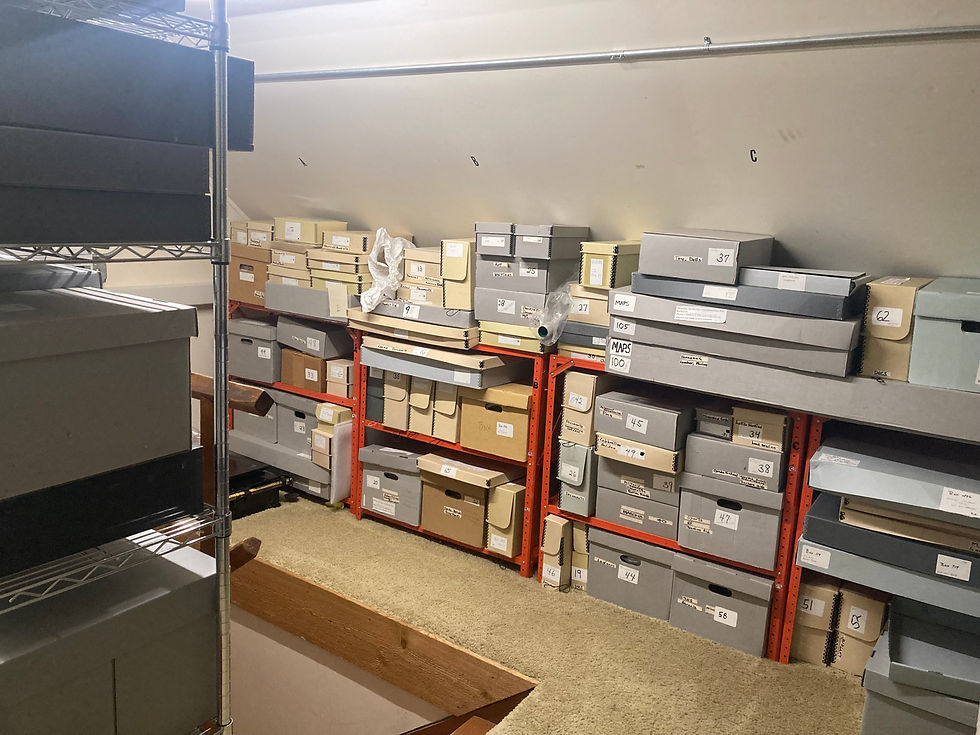

How a Collection is Built
When an artifact is donated to the museum, the donor signs a deed of gift— the legal document that formally transfers ownership to the museum. It tells us who donated an object, what they donated, and why.

Sena Wold's Egg Laying Trophy
72.009.018
Donated by Andy Wold.

Doc Gibson's Top Hat
88.015.002
Donated by Carol Walen
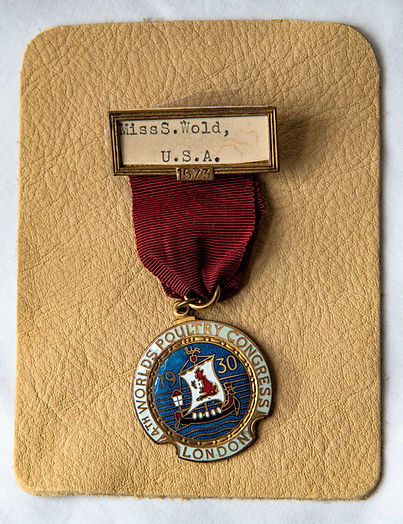
Sena Wold's Nametag
72.009.080L
Donated by Andy Wold
What happens when we don't know who donated an artifact?
Artifacts can also end up in our collection without a deed of gift. In that case we often have no idea who the donor is. Sometimes this happens because the paperwork has been misplaced or because a deed of gift was never completed. Without a deed of gift, the museum does not officially own the artifact, we are just its temporary custodians. We do our best to identify each object and its donor, but that isn't always possible. Without a deed of gift these items are recorded as Found in Collection (FIC), and we often know very little about their origins.
One way we work to resolve these mysteries and claim ownership is by following Washington State's Abandoned Property Law. This law provides a process to determine ownership of an artifact when documentation is missing.
Artifacts Found in the Collection

Graphotype
Donor: Unknown

Perm Wave Machine
Donor: Unknown

Radio
Donor: Unknown
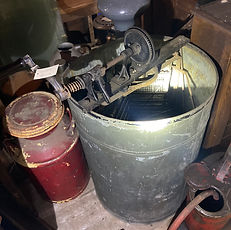
Honey Extractor
Donor: Unknown
What Is Washington's Abandoned Property Law?
Washington State recently updated its legislation to modernize how museums and similar institutions handle abandoned property. For Issaquah History Museums abandoned property refers to artifacts that have no documentation. Under the new law, museums no longer need to publish notices in local newspapers; instead, they can post them directly on their websites. Because of this change, Issaquah History Museums will begin posting abandoned property notices online in hopes of identifying Found In Collection (FIC) artifacts. Even if we are unable to identify a donor, this process allows the museum to legally claim the artifact as part of our collection.
How Does the Abandoned Property Claims Process Work?
-
We begin by searching our digital and physical records to identify the artifact and its donor. While this is often unsuccessful, we occasionally uncover helpful information or locate the donor.
-
We then create an abandoned property notice that includes all known details about the artifact.
-
This notice is posted on our website for 90 days. During this period, individuals who donated the item, know the donor, or have information about the artifact are encouraged to contact us.
-
After the 90-day posting period, the artifact legally becomes the property of Issaquah History Museums.
No Open Notices at this time.
Check back later as new abandoned property notices are posted.

I Think an Artifact is From My Family
If you believe you recognize an artifact as yours or belonging to your family, wonderful—here's what to do next:
Contact Issaquah History Museums
Email: collection@issaquahhistory.org
Phone: (425)-392-3500
Mailing: PO Box 695, Issaquah, WA, 98027
Please include your name, contact information, the specific abandoned property notice you are referencing, and any evidence or information that support your identification.
Once we receive your email, call, or letter, we will respond within five business days to learn more. If you are contacting us within three weeks of the notice's expiration date, please use email or phone for the quickest response.